Monday, October 24, 2011

The angrier we protest, the simpler the answers

The Exeter Anti-Cuts Alliance sums up "a momentous week in global protest terms". The blinkers are off:
People can see that their governments, everywhere implementing the same austerity measures, are in the hands and the pay of the global corporations and banks and their (largely invisible and unaccountable) wealthy owners.
Occupy, Uncut, anarchists, anti-capitalists, socialists, Anonymous... all are angry about the corrupt system that has resulted in the world's economic woes. You're angry with the politicians. You're angry with the bankers. You're angry with the rich. You're angry about the cuts.

Except... you know what? I'm pretty angry with you. You failed to get behind the only party that was warning about the impending economic crisis and bankers' behaviour; the only party that's against illegal wars and an authoritarian state; the only party taking climate change seriously; and the only party that wants to improve our democracy.

So you cynically failed to engage with the arguments; you failed to rally support for democratic change; and you bleat about "betrayal" and "propping up the Tories" when the reality is that the people were divided on what should be done. We need honest politicians to work together. But you have worked yourself up into a frenzy that dictates that all politicians are venal and that anything less than an automatic transmission of belief into action constitutes a betrayal.

You are holier-than-thou and angrily shout and protest as if you speak for everyone who cares about these matters, as if we don't live in some kind of democracy, imperfect though it is. That you see yourselves as equal to the heroes of Tahrir Square, Tunis, the Libyan NTC and Syria is ludicrous.

Right. You care. Good. Now take a breath. Stop with the sloganeering, the posturing and the negativity. And think how you can engage constructively, collaboratively and cleverly. We can win this one.

Saturday, October 15, 2011

Why is Chris Huhne hitting the nuclear button?

Featured on Liberal Democrat Voice

Homer Simpson is the perfect person to be put in charge of safety of a nuclear power plant.


Why?


Because he's made so many mistakes, there are no new mistakes for him to make.

OK, so this reasoning is not exactly analogous with why Chris Huhne believes that, despite all the mistakes that have been made, it's a good idea to start building new nuclear reactors again.

But he does have a quote from Winston Churchill that he feels has resonance with how the British have tried to exploit nuclear energy over the past 50 years:

"Americans can always be counted on to do the right thing, after they have exhausted all other possibilities."
Perhaps Churchill can be excused this barb, given that he was half-American.

Yesterday, Huhne, the Secretary of State for Energy and Climate Change, gave a speech to the Royal Society explaining why the future of nuclear power will be different to its past. He was explicit about the many mistakes that have been made in relation to nuclear power, but averred that nuclear power should be a key part of our future energy mix.

His speech makes five main points:


1. We're still paying for the electricity that nuclear power generated in the fifties, sixties and seventies.

In particular:
  • In the UK, there is currently enough high-level nuclear waste "to fill three Olympic swimming pools. We have enough intermediate-level waste to fill a supertanker, and a lot more low-level waste."
  • We have the world's largest plutonium stocks, which have to be guarded, converted and stored for many years.
  • The government spends £2 billion every year, cleaning up this mess.
  • The costs of decommissioning are still increasing. Now over £50 billion. 

2. Any new nuclear construction must be without public subsidy.

Huhne repeats the Coalition Agreement's vital principle that any new nuclear construction cannot have public subsidy. Whether "Feed-In Tariffs", the Carbon Floor Price or insurance liability count as public subsidy is not made clear.


3. Despite the costs and risks, nuclear should be a key part of our future energy mix.

The reason he gives for this is that "we face the greater risk of accelerating climate change if we do not embark on another generation of nuclear power. Time is running out. Nuclear can be a vital and affordable means of providing low carbon electricity".

Moreover, by 2023, all but one of our current nuclear reactors reach the end of their lives, leaving an 18% gap in the electricity supply. So that gap has to be plugged.

Huhne cites costings for the three large-scale low carbon technologies:

technology £ per megawatt hour
offshore wind 130
gas with carbon capture 95
nuclear 66

These figures include waste and decommissioning costs. He also notes that world gas prices have risen hugely over the last year, and are expected to be volatile. He argues that there are considerable uncertainties about promising renewable technologies such as wave and tidal, and costs remain high.

So he concludes that nuclear is the cheapest low carbon source of electricity.


4. A portfolio of energy generation technologies is needed.

We've been wrong before about the economics of nuclear power. We can be wrong again: "The industry still has to prove that it can build these enormous investments on time and to budget."

A "broad portfolio" of low carbon technologies is therefore needed, to handle the economic risk.


5. We must learn the lessons of the past.

And this is where Huhne invokes Churchill's quip above about how you can count on Americans to do the right thing... after they have exhausted all other possibilities. In relation to nuclear policy, Huhne says, "we have made pretty much every mistake human ingenuity could devise. And boy, are we British inventive."

Specifically:
  • Fostering a culture of secrecy in relation to strategic national decisions.
  • Conflating energy needs with military needs, and so leading to confused, expensive design decisions.
  • Letting the drive for innovation prevent the gains to be made from standardising designs: all 11 Magnox power stations were built to different specifications, for example.
  • Failing to take into account the environmental impact of nuclear power stations.
  • Failing to devise a costed plan for cleaning up afterwards, heaping costs on future generations.
  • Letting waste pile up.
  • Setting up a body that was supposed simultaneously to give the Government impartial advice and to promote nuclear energy, resulting in a lack of proper oversight.
  • Failing to ensure that regulatory systems were geared towards long-term protection.
  • Letting costs spiral without proper scrutiny.
  • Hiding subsidies in complex financial arrangements.

My reflections on this speech

I'm not at all convinced by the cost arguments presented here. Even if cost differentials turn out to be roughly as quoted over the next 30-50 years, fossil fuels and uranium are finite resources and so are not likely to be cutting-edge 22nd Century solutions. If we are serious about sustainability for future generations, I would have thought we need to focus our technological efforts on harnessing renewable resources.

This is a bit of an over-simplistic cop-out on my part though, because a lot hangs on accurate energy cost estimates. Such estimations are complex, well beyond my capabilities to unpick, and controversial. They need to take into account numerous hard-to-quantify risks and trends. But several authoritative sources have come up with estimates in which nuclear is not always the most cost-effective low carbon technology (e.g. Mott MacDonald, 2011). Of course in all discussions of such calculations there's also political game-playing, vested industry interests, scaremongering and so on, most of which serve to baffle non-experts like me into seeking simplistic grounds on which to decide.

Furthermore, although the commitment to "no public subsidy" sounds like it will finally put the viability claims of the nuclear industry to the test, governments have a long-standing habit of sneaking in subsidies by the back door. And this industry has a, as Huhne puts it, "terrible reputation for secrecy". Huhne says, of course, that he wants to encourage open competition, rather than monopolistic practices, and to ensure tough, transparent regulation, rather than a slipshod, secretive industry. And that's great; but what are the grounds for hoping that this government can get this right in the nuclear industry when the governments so clearly have got it wrong in the past in this industry and in others?

Nevertheless, on secrecy, I do wonder to what extent I'm still subconsciously influenced by that terrific nuclear thriller from the 1980s, Edge of Darkness:


But most importantly, in relation to climate change, the time-scale for nuclear looks wrong. If Britain started building 10 new nuclear reactors now, they would deliver a 4% cut in carbon emissions some time after 2025 [1]. Action is required now. As Greenpeace says, "It's too little too late at too high a price."

In addition, heat and transport energy needs are largely not addressed by nuclear power, and it would only supply a fraction of our electricity. So it is difficult to see why it is getting this level of attention as a way of addressing CO2 emissions. There has been huge investment into nuclear research and development in comparison with the research into renewables. At the same time, there are serious challenges associated with the idea that a huge investment in renewables and energy efficiency could be enough to cover both the lost nuclear power and the fossil fuels we need to stop using. So I don't have the answers, but I don't think that nuclear is the solution.

(These reflections are based on Huhne's speech. So I'm leaving to one side the familiar issues of aesthetics, safety, waste management, terrorism, nuclear proliferation, and uranium mining)

Over the years I've moved from equanimity about nuclear power to ambivalence to scepticism to opposition. I'm still open to contrary arguments. But it seems to me that appearing to have "exhausted all other possibilities" does not imply that what we do next constitutes "the right thing". We are ingenious in our ability to create new ways of failing. And I'm not yet convinced that there are strong enough grounds to be confident we'll avoid repeating old ways of failing.


Acknowledgments

Monday, October 3, 2011

Doctor Who: The War Games

Continuing my catch-up of highlights from the last 50 years of Doctor Who, we reach the end of the Second Doctor's era.

(Spoilers follow)


And the difference in ambition between earlier stories and "The War Games" is huge: 10 parts, richer music and camerawork, multiple time zones, a more complex story, diverse motivations... and... we finally meet the Doctor's own people...

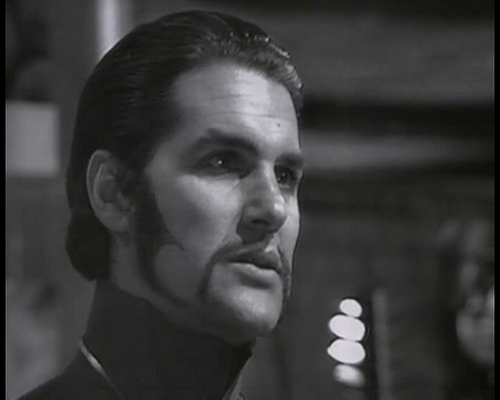
The Doctor, Jamie and Zoe discover a planet on which soldiers abducted from various times in Earth's history are being brainwashed into continuing their conflicts in simulations of those periods. The idea is to train an army to conquer the universe. The plotters are helped by a renegade Time Lord, "The War Chief", one of the Doctor's own race.

There is a revealing exchange between the Doctor and the War Chief, in which the Doctor is defensive about his reasons for leaving his home planet and rejects the War Chief's quest for power.

WAR CHIEF: You may have changed your appearance, but I know who you are.
THE DOCTOR: Oh do you?
WAR CHIEF: Your machine is a TARDIS. You're too familiar with its controls to be a stranger.
THE DOCTOR: I had every right to leave.
WAR CHIEF: Stealing a TARDIS? Oh I'm not criticising you; we are two of a kind.
THE DOCTOR: We most certainly are not!
WAR CHIEF: We were both Time Lords and we both decided to leave our race.
THE DOCTOR: I had reasons of my own.
WAR CHIEF: Just as I had.
THE DOCTOR: Your reasons are only too obvious: power!
WAR CHIEF: How much have you learnt of our plans?
THE DOCTOR: I know you've been kidnapping soldiers from the Earth from various times in its history and bringing them here to kill one another.
WAR CHIEF: But do you realise our ultimate objectives?
THE DOCTOR: No objective can justify such slaughter!
WAR CHIEF: The war games on this planet are simply a means to an end. The aliens intend to conquer the entire galaxy. A thousand inhabited worlds.
THE DOCTOR: Yes, but why choose the people of the Earth?
WAR CHIEF: They are the most suitable recruits for our armies. Man is the most vicious species of all.
THE DOCTOR: Well that simply isn't true!
WAR CHIEF: Hmm... Consider their history; for a half a million years they have been systematically killing each other. Now we can turn this savagery to some purpose. We can bring peace to the galaxy - and you can help. You see, I'm not the cold-hearted villain you suppose me to be. My motives are purely peaceful.

The climax sees the Doctor calling for help from the Time Lords via a small box, a means of communication that cropped up again earlier this year in "The Doctor's Wife". The last episode is on the Time Lord home planet (which we now know to be Gallifrey).

Having seen the Time Lords appearing as from Hell in the Tenth Doctor's final story, the Time Lords in the War Games initially appear monk-like. They seem austere, gentle, peaceful, thoughtful, serene, slightly aloof. But then we come to their punishments... They decree that the planet behind the war games plot is to be isolated forever from the rest of the universe by a permanent force field. And the leaders of the plot are removed from time, as if they never existed.

Meanwhile, the Time Lord's punishments for the Doctor's crimes (stealing the TARDIS and interfering in history) are particularly cruel. They force a regeneration on the Doctor and exile him to a single time on a single planet (Earth); something like torture for an inveterate wanderer in time and space. But they go further, and wipe Jamie's and Zoe's memories of the Doctor, apart from their first encounter with him. Just as with Donna Noble in recent series, the loss of memories of so many adventures that saw these companions develop and grow as people seems shocking. Jamie and Zoe do not know they have suffered, but a central part of their existence has been lost to them. Moreover, this action also punishes the Doctor horribly. There is no possibility of his ever being able to reminisce about old times with these dear friends.

How was it?

Not too bad. A bit long, with some (unintentionally) laughable moments, particularly the mannered acting of the Security Chief and the unrealistic fight scenes. The bad guys come across as interestingly intelligent and diverse, although subsequent television history means that Blackadder's General Melchett has made one of the protagonists less scary than he might otherwise be! Nevertheless, some interesting ideas, pursued intelligently, unfolding nicely, and without crudely spelling everything out. The Doctor's terrific fear of the Time Lords is palpable, and his attitude to them hints at a liberal critique of the powerful.

Audience Reaction 2011

I decided to show just episodes 8 to 10 to one of the 21st century companions with whom I have been erratically sharing this Doctor Who catch-up. Despite the borderline offensive stereotypes (particularly of the Mexican bandit), the historical periods were of interest. But boredom thresholds were quickly breached. The special effects, music, dialogue and pace were the familiar culprits. Nevertheless, clear improvements in these aspects over previous stories were noted. The quality of the ideas was also appreciated.

Idle Questions
  • Why did the War Chief not regenerate when shot by the security guards?
  • Aren't ground troops a slightly underpowered way of conquering planets?
  • How will the Doctor get his TARDIS back?
For an alternative view...

Next time on LW's DW catch-up...
The very next episode, the Third Doctor appears in "Spearhead from Space".


Friday, September 16, 2011

No more Torchwood, touch wood

I've been busy defending Torchwood: Miracle Day to friends over the past couple of months. Now I've seen the finale I'm rather regretting that.

I never said Miracle Day was very good; just that it was a return to the ups and downs in quality of the first two series, after the blip that was the exceptional third series Children of Earth.

To be fair, I never found compelling the concept, characters and stories of the first Torchwood series (left). I stuck with it for the first two series in the hope of the writing being able to build on the flashes of brilliance that it occasionally showed. Children of Earth worked brilliantly (no thanks to the previous two series), and made me care about Jack and Gwen.

I defended Miracle Day in response to the outpouring of critical ordure that was being heaped on it in relation to the story, the characters, the sex and the violence. I didn't think it was terrible. Just not terribly good. Much like the first two series.

The final episode, though, made me rather ashamed for having stuck with Miracle Day. There were no satisfying pay-offs. No real answers. No authentic emotion. No explanations for the numerous loose ends and idiosyncratic tangents. It was naff and pointless. And an insult to the intelligence of the viewer.

I still think over the whole series that the actors did their best with, on-the-whole, weak material. The ambition was great, and the writing and direction did have their moments; but mostly this series failed to work for me at all in terms of mystery, suspense, character, story, incidental music, you name it.

If there is another series of Torchwood, I'd watch it. I tend to like sci-fi, and I couldn't bear not knowing how Jack's and Gwen's lives continue. But I'd rather there is no more Torchwood, unless it's up to the quality of Children of Earth. This series was 10 hours of my life I'm not going to get back.


Monday, September 12, 2011

Exeter's newspaper: neither Express nor Echo?

Back in the early 18th century, Exeter was one of the earliest English cities outside London to have a weekly newspaper [1]. Exeter's popular local daily paper - the Express and Echo - has been going since 1904. Now in 2011, the Echo has just gone weekly. What's the story?

Over the years, I've bought the Echo only intermittently. I like to support local journalism. After all, who else would spend the weeks and months (sometimes even years) needed to scrutinise local developments and ferret out hidden scandals?

However, as with many local papers, much of the time there's not much to report; and adverts, trivia and worthy campaigns are the main content. Recently, tedious parking stories have been trying the patience of readers. The Echo's journalists do their best. But often there's not enough in the paper to interest me.

Times are particularly hard for local newspapers at the moment. Advertising revenue is down; and people are preferring to get their news instantaneously and free from the web, rather than a day late from a local rag that costs money.

It's in this context that the Echo has just gone weekly (also see the comments on this announcement at HoldTheFrontPage and thisisexeter).

What does this mean for Exeter's newspaper?


A brief history of the Express and Echo

The publisher, Northcliffe Media, is owned by the Daily Mail and General Trust, but mostly does not follow The Fail's blatant biases and obsessions.

The Echo tends to go for human interest, but that's popular journalism. It tends to favour the sitting MP (Labour's Ben Bradshaw), but he's a nice chap and a former Secretary of State for Culture, Media and Sport, so that's understandable. And the Echo tends to bash the city and county councils, but again that's understandable, since it's a key part of the paper's role to hold these councils to account.

The editor, Marc Astley has been with Northcliffe for 20 years, and has edited the Echo since 2007 [2]. He was previously deputy editor of the Nottingham Post and assistant editor at the Hull Daily Mail [3].

The Echo most recently cost 36p, and its circulation was around 17,000 a day [4]: not bad for a city of only 120,000 people.


What is the new weekly Echo like?

At first glance it looks like the old daily edition, but bulkier. It costs £1 and promises "20 pages of local sport. Plus 88 pages of property. And the latest job vacancies." Curiously, the word "Exeter" does not appear on the front page, except in the tiny www.thisisexeter.co.uk url. But this seems to be a tradition [5].

It has some big stories this week (well, "big" for local news), including...

  • a front-page exclusive on highly confidential police information left in a car sold at auction;
  • plans for a new site for the Exeter Royal Academy for Deaf Education (a long-standing contentious issue);
  • the deferral of plans for a £19m research centre at the Royal Devon and Exeter Hospital;
  • a proposed expansion of Exeter International Airport;
  • multi-million pound plans for a training facility for successful local rugby team the Exeter Chiefs;
  • and the news that there are more "increasing risk" drinkers in Exeter than anywhere else in the country.
These stories and more are covered in some 46 tabloid-size news and features pages. On average about half of each page is taken up with advertising, in addition to the 18 full-page advertisements. The writing style seems quite flat. Neither especially sensationalist nor particularly formal.

Other familiar sections for local papers are present:
  • Property (88 pages, as a separate pull-out section)
  • Sport (20 pages)
  • What's On (11 pages)
  • Classifieds (7 pages)
  • Letters and opinion (6 pages)
  • Cars (5 pages)
  • Jobs (4 pages)
  • Announcements (2 pages)
  • Puzzles (1 page)


Do we need a printed Echo?

According to the excellent Exeter Memories website, James Owen launched the Echo in 1904 with the words:
"We claim to do no more than to give our friends news served up in the brightest, crispest manner we know how. Performance being at all times preferable to promise, we will not trouble our readers with protestations. Here is the paper and we must be judged by it."
The first issue leads with a report on the Russian-Japanese war, and follows up with the story of a cyclist decapitated in an accident.

But in 2011, Catherine Fraser, features writer for the paper, notes (p. 21):
"A few people have wondered whether a regional newspaper is relevant in this world of instant information, local and national, on the radio, television and internet, either through traditional routes or, increasingly, mobile phones, and have suggested that we just shut the presses down forever."
Nevertheless, she makes...
"... no apologies for the same agenda of bringing you all the local news, battling bureaucracy, running campaigns and taking pride in our place in the city. ... there is no question that a local newspaper still plays a very important role in its community - and beyond."
She cites as an example the story of a local woman with breast cancer, a story which led to significant donations and fundraising events, and then became a national story.

Almost all the stories, with the front-page exclusive a clearly deliberate exception, became available on the thisisexeter website in the days leading up to publication day. The larger stories were available from online sources, particularly the BBC, although not typically as readily as from the Echo. The old knotty question remains as to whether the Echo's website (a free, generic and badly-designed Northcliffe construction based on automated feeds) is undermining print sales, and whether that matters given the income from online advertising.

In relation to news, The Echo is also competing with BBC News online, the BBC television programme Spotlight (and related shows from the South West studios), and ITV Westcountry News. These services have shrunk in recent years, with the economic downturn: they cover larger geographical areas than previously, have less resource, and lack some of the content they once had. But they are still formidable competitors. Radio, too, offers potentially more immediate and dynamic news than the printed page. Exeter FM, Heart and BBC Radio Devon seem to be surviving for now.


What about advertising?
If the value of printed news is under question, how much more this must be true of other sections. Perhaps I underestimate the proportion of people who prefer to shop for houses or cars through printed newspapers rather than through the Web. But why would one choose to pore over pages and pages of houses or cars most of which don't fit my needs than use the user-friendly and powerful web-based search engines that show me far greater detail, tailored to my particular requirements?

88 pages of property is a huge amount, in straitened times, so clearly estate agents believe that they make enough sales via such ads to justify the cost. Moreover, findaproperty.com is heavily promoted at the start of the property section, so it is clear that these printed pages still happily co-exist with online house-buying tools.

On the other hand, at just 5 pages, the motoring section is a pale shadow of past years. So either far fewer people are buying and selling cars than previously, or the convenience of being to locate a car online is winning out. Maybe something similar is true in relation to jobs. And it's clear that classified advertising is also potentially threatened by internet-based initiatives such as eBay and Freecycle.


Isn't the paper a focus for citywide debate?

In the time before websites, Twitter and Facebook, local newspapers served hugely important civic functions of galvanising and hosting public debate in favour of reform [6].

These days, the Echo's leader column and opinion pieces are largely anodyne; while the letters pages are dominated by the largely lowbrow scribblings of a small number of slightly bewildered eccentrics.

Yet the newspaper can still serve as a focus that can easily be lost in the cacophony of digital channels and online sites. You still frequently hear "Did you see that article in the Echo about...?" Twitter has an Exeter community, but its core is tiny in comparison with the Echo's circulation. And even a medium renowned for being tomorrow's chip wrapping is far less ephemeral than the rapidly-changing Twitter, at least for now, when it comes to its impact on citywide debate.


What's the future for Exeter's newspaper?

It could be argued that Exeter's printer newspaper is neither express nor echo. Firstly, it lacks the "express" immediacy of the TV, the radio, and the internet. And secondly, its role in "echoing" the views of the good people of Exeter has been overtaken in some respects by Twitter and the web. Yet there is a fluidity right now about how all these media operate, a fluidity that inhibits hard-and-fast conclusions about the future for print newspapers.

It is possible that if the move to a weekly format fails, the Express and Echo could become an adjunct of the Western Morning News, a stablemate in Northcliffe's South West Media Group. After all, we have seen other media services having to enlarge their geographical areas in response to changing financial circumstances.

Yet news is a peculiar thing. A minor burglary a few miles away is not news; a burglary up the road is. A primary school next door getting bad results is not news for me unless my children go there; a big company going bust elsewhere in the county is, if it has implications for the economic health of the city. Getting "local" news right is very hard to do, and I doubt that newspapers, TV, radio or the internet are yet in a stable state, conceptually or financially.

My own view (pace Marshall McLuhan) is that the medium isn't the message. The polis requires good local journalism, and I don't mind if that journalism is attached to the printed page, the airwaves or the broadband connection, so long as it is somehow sustainably funded. The future of local journalism is not clear.


Acknowledgements

  • Pictures of the first issue of the Express and Echo, the sub-editors and the machine room are from Exeter Memories.
  • "Old printing press", by -Kj

Monday, September 5, 2011

Archers Update

Today I finally managed to catch up my podcast listening to the latest edition of The Archers.

The great thing about the podcasts is that you never need to miss an episode. The downside is that you can fall weeks behind when you're busy.

I've been weeks behind since... not sure... probably April or May.

So I'm taking to the opportunity to jot down a few thoughts...


!!!!!! Spoilers below !!!!!

  1. The Archers Timeline is brilliant. Never again do I need to wonder when exactly Emma first slept with Ed; when Usha first arrived in the village; when Brian had an affair with Caroline (shudder); when Pat proposed to Tony; or when Kenton joined the Navy. (Hmmm... not sure those count as "spoilers"!)
  2. Something dreadful seems to have happened to Emma Grundy (née Carter). She used to have the scarcely-suppressed passions of a Hardy heroine. Now she appears to be turning into a more feckless version of her mother (double shudder). Almost as disappointing as the failed descent of the religiously self-righteousness Shula into Madame Bovary.
  3. Against expectations, Little Henry Archer is still not yet showing signs of the autism that would fit so well the story arc of the beautiful, tragic neurotic Helen; Little George Grundy seems so far unaffected by his mother being his aunt; Miles and Flora Little Freddie and Little Lily Pargetter are staying the right side of insanity for now; Little Phoebe Tucker has yet to turn into anything resembling the glorious monster that is Kate Madikane (née Aldridge); and Little Ruairi has yet to display the consequences of his journey from the controlled mania of his mother Siobhan to the beautifully portrayed cauldron of irritation, selfishness, indulgence and neglect practised by Brian and Jennifer.
  4. Josh "crayfish" Archer is turning into a most interesting character. Difficult to believe that he's from the same family as David, Ruth, Pip and Ben.
  5. Ambridge Extra gave voice to Rhys the Bull barman; introduced tension into the marriage-made-in-heaven of nasal but fragrant Alice Aldridge and thick but hunky Christopher Carter; and fleshed out the character of Jamie Perks. But it didn't move or excite in any way. And it failed to fix the woeful neglect of the wonderful Kirsty Miller!
  6. Clarrie "E. Coli" Grundy deserves our sympathy, in a great storyline. But the marketing genius that is Brenda Tucker does not. How can the word "re-branding" have failed to cross her lips yet?
  7. The partnership that is James "Occupation: Property development/management consultant/waster" Bellamy and Leonie "The Rightful Heir to Lynda" Snell is fantastically ghastly. Excellent!
  8. Happy 90th Joe Grundy, another of my favourite characters.
Acknowledgements

Monday, August 22, 2011

How the BBC's Newsnight can recover

There's a useful debate over at The Observer on "Has Newsnight lost its way?" As anyone who's followed my tweets over the last year can tell, I'm pretty much with John Naughton's views. There are some good comments there too.

The guests are drawn from a narrow pool, often lacking the intellectual heft that a serious-minded analysis requires. Moreover, the discussions often seemed designed to generate heat rather than light, and they are far too short to allow proper elaboration and critical engagement. Meanwhile, Jeremy Paxman's interviews have become shallow lazy exercises in attention-seeking rudeness rather than the razor-sharp dissections they should be.

More broadly, this comment from Naughton is particularly telling:
"What was most striking about Newsnight's attempts to cover the recent unrest was the absence of any sign of intellectual curiosity."

Rather than dwell on the negatives though, I'd like to summarize my view of how Newsnight can recover:

1. Newsnight needs to sharpen its focus on what gets lost in the hubbub of 24 hour news. This means putting events into social and historical contexts, and worrying away at the kinds of questions that Naughton notes are missing: the hows, the whys, the shoulds. It means forensic analysis and not accepting simplistic answers.

2. The presenters and reporters need to be given time to do their jobs. Maitlis, Esler, Mason, Urban, and Watts are all good journalists. They are being let down by an agenda that is about grabbing attention rather than pursuing understanding. They need more time and a clearer mission.

3. Interviews need to be more subtle. The old-fashioned bombastic interviewing style of Paxman and Wark has had its day. It's time for careful questioning rather than trying to provoke gaffes.

4. The excellent Max Atkinson has noted a number of production mistakes that need to be stamped on. Examples include distracting graphics, silent speeches, and patchwork formats.

5. More intellectuals should be invited on, and they need to be given time to develop their views and to engage directly with each other. Lack of proper time for these discussions and too much interruption lead to superficial analysis.